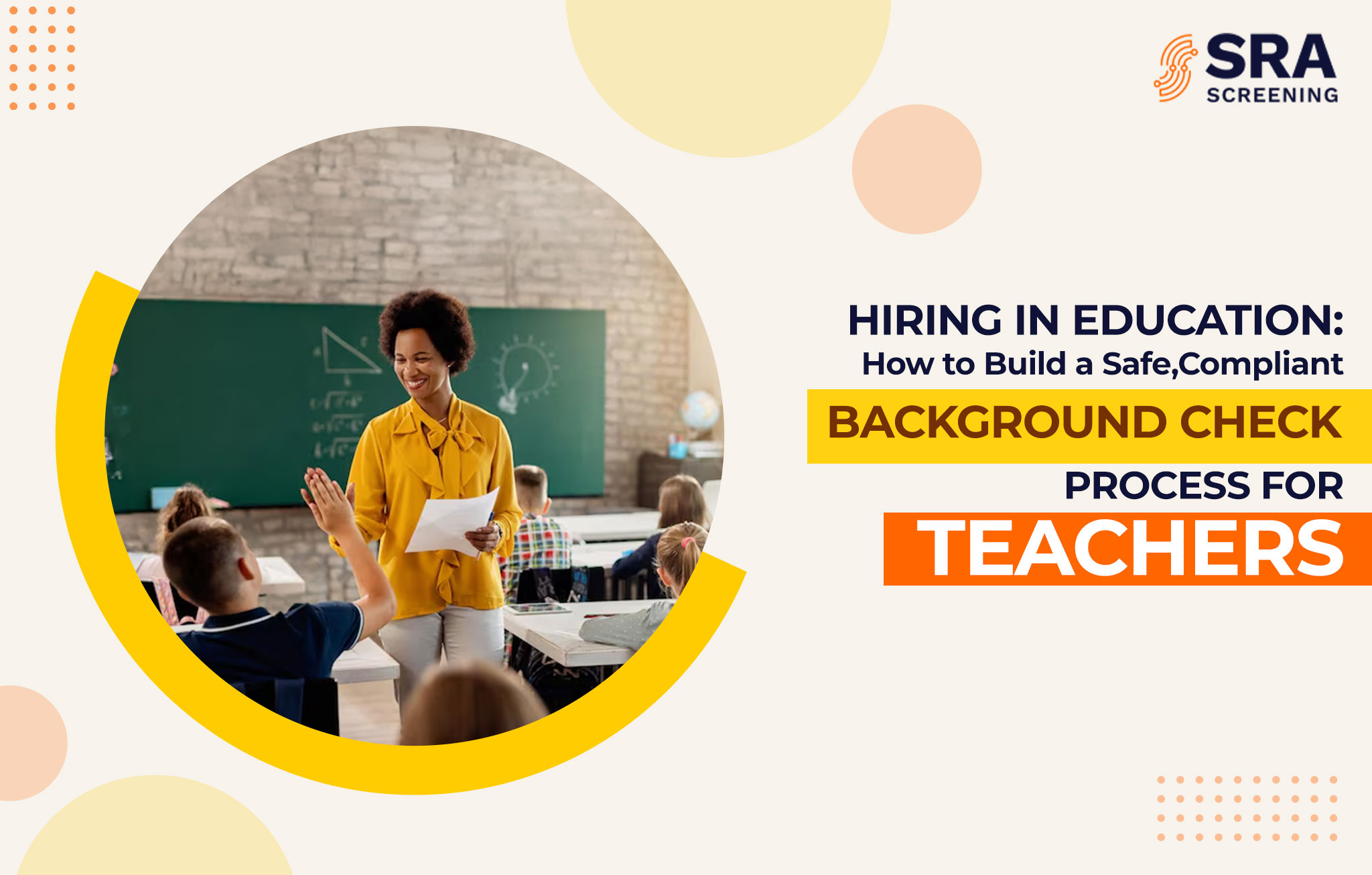
As an educational employer, every hiring decision you make either reinforces or erodes that trust. That’s why background checks in education – especially background checks for teachers – aren’t just an HR formality; they’re one of the most important safeguards you have.
In recent years, stories of individuals slipping through weak screening processes have made headlines and shaken communities. When something goes wrong, the question is almost always the same: “How was this person allowed to work in a school?” A strong, compliant background check program for teachers is your answer to that question, before it’s ever asked.
A well-structured background screening program for teachers and school staff helps protect the students, reassures parents, and offers confidence that the hiring is done with the highest standard. In the sections that follow, this blog will explore the importance of comprehensive background screening in education (for teachers, volunteers, and other school staff), what comprehensive screenings typically include, and the key compliance requirements educational employers should understand.
Educational roles are different from most other jobs. Teachers and school employees work closely with children and young adults on a daily basis. They also often build close, long-term relationships with students, families, and the community. That combination of access and trust makes thorough screening non-negotiable.
There’s also a legal reality: many states require specific checks for anyone working in or around schools, from full-time teachers to contracted service providers. Failing to follow those rules doesn’t just put students at risk; it can expose your district, school, or organization to regulatory penalties and civil liability.
Reputation is another piece of the puzzle. For education organizations, families and candidates want to know that safety is more than a slogan. A transparent, well-structured background assessment tells your community that you take your duty of care seriously.
Education background checks tend to be more in-depth and specialized than a standard pre-employment screen. The exact package depends on your state’s requirements and your institution’s policies, but most programs include several core components.
When schools run background checks on teachers, volunteers, and staff, the process often starts with a multi-jurisdictional criminal database search to look for possible records across multiple states. In the education industry, this is typically followed by county and statewide court searches in places where the individual has lived or worked to verify any convictions or pending charges. For some roles, especially those with greater responsibility or access, a federal criminal court search may also be included.
Because teachers and school staff often work closely with minors, sex offender registry searches are a critical component of the screening process and are frequently required by law. These searches typically include state and national sex offender registries to identify individuals who have been convicted of qualifying offenses.
Verifying a candidate’s education and employment history ensures that the information shared on a résumé or during an interview is accurate and complete. This process confirms past job titles, dates, and responsibilities, as well as degrees, credentials, and teaching program completion. It’s a reliable way to spot discrepancies early and ensure candidates meet the qualifications required for the role.
For licensed roles such as teachers, school nurses, and counselors, verifying licenses with the appropriate state boards is essential. This step ensures that the license is valid, current, and free of serious disciplinary actions or revocations.
Anyone responsible for transporting students is typically screened through an MVR check, which shows license status, major violations, and driving-related offenses like DUIs.
One of the biggest gaps in many education screening programs is what happens after hire. A one-time background check for a teacher, for example, provides only a snapshot in time. Some organizations now re-screen employees every few years or enroll them in ongoing monitoring programs where legally permissible. If a new, relevant arrest or conviction occurs after hire, the employer can be notified and respond appropriately, rather than waiting for a recheck years later or finding out through the news.
Background checks can have a substantial impact on individuals’ livelihoods, and their misuse may unfairly exclude qualified candidates, which is why the process is subject to strict regulation. While you should always consult legal counsel for specific guidance, there are several key regulatory frameworks to understand.
At the federal level, the Fair Credit Reporting Act (FCRA) applies whenever you use a third-party background screening company. Under the FCRA, you must provide a clear, standalone disclosure and obtain the applicant’s written authorization before ordering the report.
If you might take an “adverse action” (such as rescinding an offer) based on the results, you must follow a defined process that includes giving the candidate a copy of the report, a summary of their rights, time to dispute inaccuracies, and a final notice if you proceed.
Beyond federal regulations, states impose their own education codes, childcare statutes, and background screening mandates for teachers. Requirements can differ based on location, role, and program type, including how checks must be conducted and how results are evaluated. For organizations that operate in multiple states or offer virtual programs, keeping up with these state-by-state differences is essential to staying compliant.
Background checks play a critical role in keeping schools safe, but the real impact comes from how they’re implemented. A thoughtful, well-structured process ensures every candidate is screened fairly, every role is handled consistently, and your team can manage requirements with confidence.
A strong foundation starts with a clear, written policy based on job roles. Instead of deciding case-by-case, create standard screening packages for teachers, paraeducators, administrative staff, volunteers, and contractors. Define which checks each group requires, how often they’re repeated, and what types of offenses may be disqualifying. This structure helps maintain organization, ensures fairness, and strengthens defensibility when hiring decisions are questioned.
Consistency remains one of the most important best practices. When candidates in similar roles receive different levels of screening, it’s harder to justify decisions and avoid claims of bias. Using role-based packages ensures that everyone is screened the same way for the same position.
Candidate experience also plays a key role. Applicants may be unfamiliar with the depth of required checks, so clear communication matters. Explaining what the process includes, how long it takes, and what steps are involved helps set expectations. If an issue appears on a report, providing candidates a meaningful opportunity to review and respond contributes to fairness and transparency.
Looking beyond the legal minimums can also strengthen your program. Even if your state requires only a state criminal check or professional license verification at hire, adding periodic re-screening or additional checks for higher-risk roles can create a more comprehensive safety net aligned with the responsibilities of each position.
Because background checks involve highly sensitive information, privacy and data security must be part of your process. Limit access to authorized staff, store records securely, and follow clear retention and destruction policies to protect both candidates and employees.
Finally, many schools partner with a screening provider experienced in the education industry. The right partner can help configure role-based packages, stay ahead of changing requirements, and streamline compliance tasks like adverse action.
At its core, hiring in education is about trust. Parents trust teachers with their children; students trust them with their safety and future, and communities trust schools to uphold standards worthy of that responsibility. A thoughtful, well-executed background check program is one of the most concrete ways you demonstrate that you take that trust seriously.
By understanding why background checks for teachers, school volunteers, and other school staff are so critical, recognizing what a comprehensive screen should include, staying aligned with relevant laws, and following best practices, you transform screening from a box-checking exercise into a strategic safeguard. You reduce risk, strengthen your reputation, and create a safer environment for everyone on campus.
If you haven’t revisited your process in a while, now is a good time to map out what you’re doing today, compare it against current requirements, and identify gaps—especially around volunteers, contractors, and rescreening.
With a clear policy, consistent application, and the right partners, you can feel confident that when students walk through your doors, the adults welcoming them have been vetted with the care they deserve.
SRA Screening partners with education organizations to deliver thorough and reliable background checks that support the highest standards of safety and compliance. We handle every requirement involved in the screening process, ensuring accurate reviews and consistent adherence to regulations. By managing the details, we help you create a safer environment for students, staff, and the entire school community.
Hire with confidence and turn compliance into peace of mind with SRA Screening.
1. Do volunteers and contractors need background checks?
In most states, yes—especially if they will have direct or unsupervised access to students. Requirements vary, but many states mandate criminal checks, sex offender registry searches, or additional vetting such as professional license or credential verification for certain volunteer and contracted roles.
2. What makes education background checks different from standard pre-employment checks?
Screening in educational settings is more extensive because school employees interact with minors and have higher levels of access and trust. As a result, many states have industry-specific laws requiring schools to conduct particular teacher screenings, follow stricter timelines, or verify certain credentials. These regulations often go beyond what is required in typical commercial hiring.
3. What information is included in an education background check report?
Background screenings for education-related positions typically include criminal history searches, sex offender registry checks, employment and education verifications, and relevant license or credential verifications. The exact components of the report vary based on state regulations and your organization’s screening policies.
4. How long do education background checks take?
Turnaround times depend on the types of searches included and how quickly schools, employers, and licensing agencies respond to verification requests. Many components return within a few business days, while items requiring manual verification or out-of-state records may take longer. On average, most reports are completed within 48–72 hours.
DISCLAIMER: This blog post is for informational purposes only and is not legal advice. Please consult a qualified professional before making any decisions.
The FCRA is enforced federally, but states may also implement it and have their own consumer reporting laws. You may have additional rights under state law. For more information, contact your state or local consumer protection agency or your state attorney general.
Get updates, exclusive offers, and insights straight to your inbox.