For many employers, ensuring that new hires can meet the physical demands of their jobs is essential, especially in industries where safety, performance, and compliance are critical. Pre-employment physicals offer a practical way to assess whether candidates are fit for duty, while helping organizations stay aligned with legal and regulatory standards.
More than a routine health check, a pre-employment physical serves as a protective measure for your workforce and your business. When included as part of a comprehensive employment screening, pre-employment physicals help reduce risk, improve safety outcomes, and promote a workplace culture built on responsibility and operational readiness.
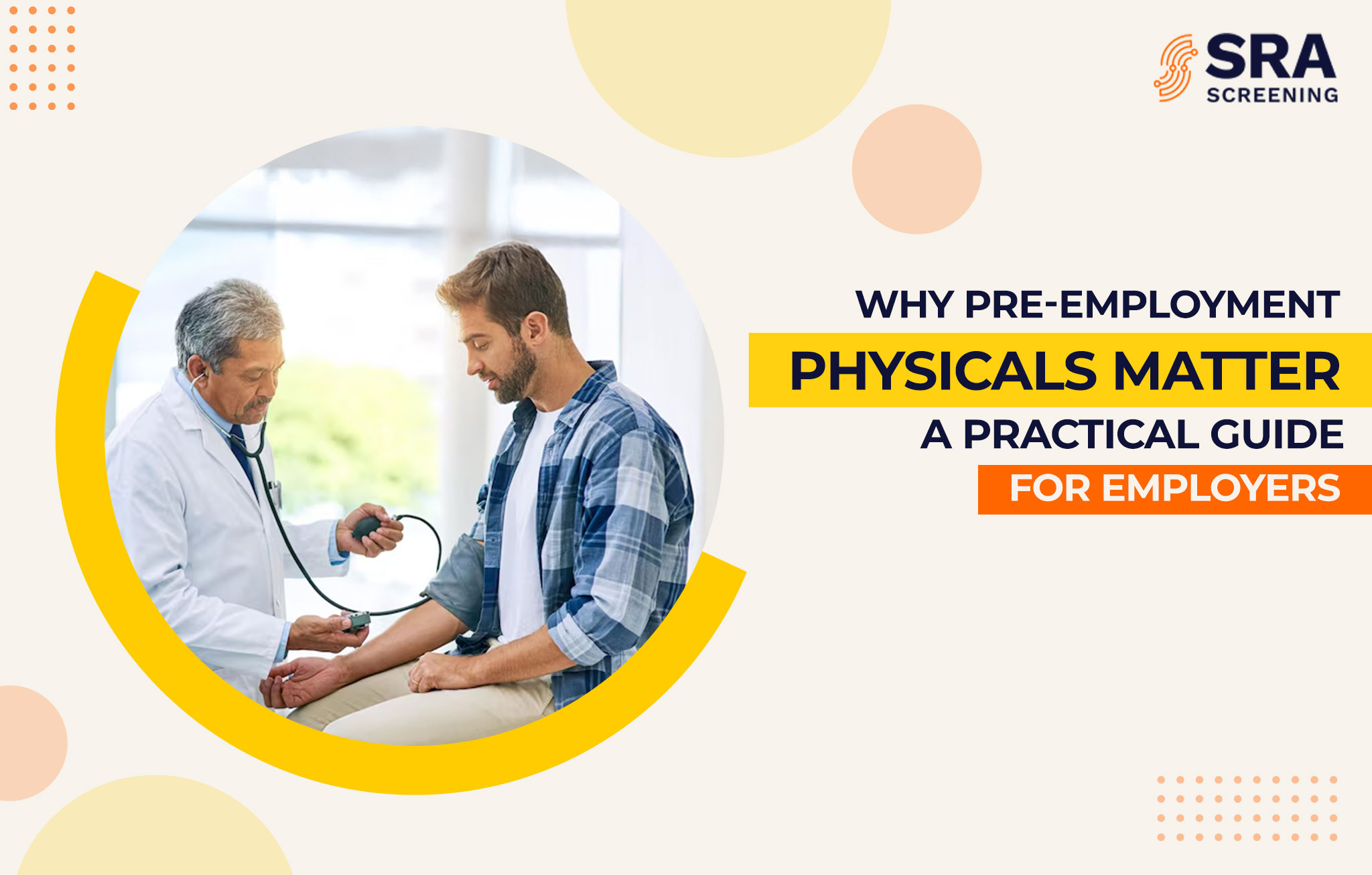
A pre-employment physical, also known as a pre-employment medical exam, is a health assessment conducted after a conditional job offer is made. Its purpose is to determine whether a candidate can safely and effectively perform the essential functions of the position.
Unlike general medical exams, pre-employment physical assessments are tailored to the specific demands of the position. Depending on the role, testing may evaluate overall physical health as well as job-related capabilities such as strength, endurance, flexibility, or mobility. This targeted approach ensures the exam remains relevant, compliant, and fair.
When administered appropriately, pre-employment physicals help employers confirm fitness for duty while demonstrating a commitment to workplace health, safety, and compliance.
Not every position requires a pre-employment health exam, but they are crucial in occupations where physical ability directly impacts safety and performance.
Pre-employment health screenings for employment are commonly required in industries such as:
In these settings, confirming a candidate’s ability to meet physical job requirements helps minimize workplace injuries and promotes a safer environment for everyone.
Pre-employment physicals go beyond simple health checks, serving as an essential safeguard for both employee well-being and workplace safety.
Pre-employment medical exams can identify health or fitness limitations that may increase the risk of injury. This is especially important in safety-sensitive environments where an employee’s readiness can impact others on the team.
By confirming physical capability before employment begins, employers can help prevent injuries caused by strain or overexertion. This often leads to fewer workers’ compensation claims, lower insurance costs, and reduced downtime.
Employees who are physically prepared for their roles are more likely to perform effectively, experience less fatigue, and remain with organizations longer. A thoughtful pre-employment health screening process set expectations for success from day one.
In regulated industries, pre-employment physicals help employers meet federal and state requirements while reducing the risk of non-compliance or discrimination claims.
Proper implementation of pre-employment medical screenings isn’t just best practice — it’s a legal necessity. Employers must conduct these exams consistently, fairly, and in compliance with applicable laws.
Key considerations for a pre-employment health assessment include:
Under the Americans with Disabilities Act (ADA), employers may only require a pre-employment physical after a conditional job offer has been made.
A physical exam for employment must be directly related to the role’s essential duties.
To avoid discrimination, employers must apply the same exam requirements to all candidates being considered for the same position.
Health information must be stored separately from personnel files and handled in accordance with applicable confidentiality and privacy requirements.
In addition to federal laws, some states impose additional rules regarding testing procedures and medical data handling. Staying up to date with local legislation is essential to maintaining compliance.
Pre-employment physicals are more than just a compliance checkbox — they’re an essential step in building a healthy, capable, and dependable workforce. By ensuring that candidates are physically prepared for their roles, employers can reduce injury risks, control costs, and foster a culture built on safety and accountability.
Where to get a pre-employment physical?
At SRA Screening, we provide end-to-end screening solutions that support smarter hiring. Our full suite of screening services, including background checks, pre-employment physicals, drug and health screening, and more, helps organizations hire confidently while meeting compliance and operational standards.
1. What does a pre-employment physical consist of?
A pre-employment physical typically includes a review of medical history, a vital signs check, and a general physical exam assessing areas such as heart and lung function, vision, and overall physical health. Additional testing, such as blood or urine analysis, may be required depending on the role.
2. Where can a pre-employment physical be completed?
Pre-employment physicals can be administered at occupational health clinics, medical facilities, or through a background screening provider that coordinates compliant medical evaluations.
3. What is a return-to-work physical?
A return-to-work physical, or RTW, is a medical evaluation for an existing employee returning after an injury, illness, or extended absence. It helps determine whether the employee is fit to safely resume job duties.
4. Are pre-employment physicals required for high-risk jobs?
Yes. Pre-employment health screenings are often required for high-risk or safety-sensitive positions and help ensure candidates meet job-related physical requirements while supporting workplace safety and compliance.
5. When are pre-employment physicals conducted?
Pre-employment physicals are performed after a conditional job offer has been made, in accordance with applicable employment laws.
DISCLAIMER: This blog post is for informational purposes only and is not legal advice. Please consult a qualified professional before making any decisions.
The FCRA is enforced federally, but states may also implement it and have their own consumer reporting laws. You may have additional rights under state law. For more information, contact your state or local consumer protection agency or your state attorney general.
Get updates, exclusive offers, and insights straight to your inbox.