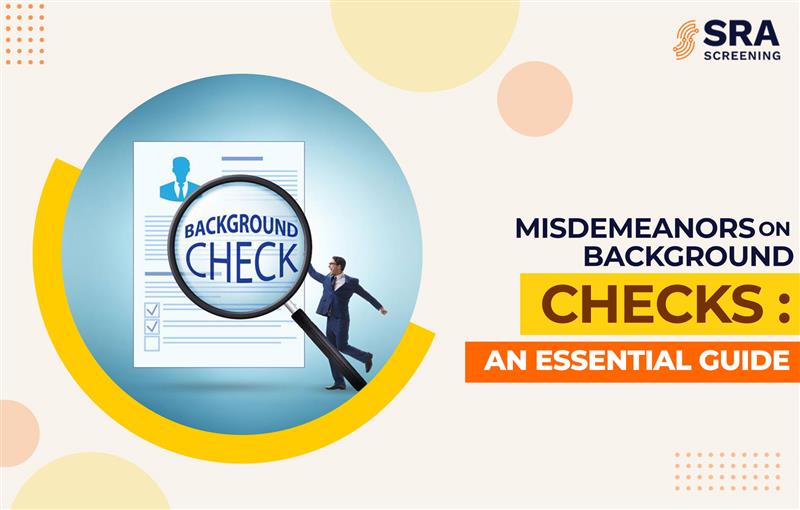
Background checks are a standard and necessary part of today’s hiring process. Employers rely on them to verify criminal history, support workplace safety, and maintain compliance with applicable laws and regulations. Misdemeanor convictions are a common component of criminal background checks and are routinely included in employment screening programs.
For employers, understanding how misdemeanors appear on background checks is essential for maintaining consistent and compliant screening practices. Clearly defined screening processes also promote transparency and reliability throughout the hiring workflow. This guide explains what misdemeanors are, how they are reported on background checks, and the legal and compliance considerations involved in reporting criminal history information.
A misdemeanor is a type of criminal offense that may result in penalties such as fines, probation, community service, and short-term jail sentences, often limited to one year or less. If incarceration is imposed, it is typically carried out in a local or county jail.
Misdemeanors can appear on background checks, but their visibility depends on the type and the scope of the background check requested. Because misdemeanors are typically handled at the county or municipal court level, related records are often stored within local court systems. As a result, searches that include county-level court records in relevant locations are more likely to return misdemeanor offenses than searches that rely solely on statewide or national databases.
Additional factors may also influence record visibility, including the nature of the offense, the amount of time that has passed since the conviction, and whether the record has been sealed, expunged, or otherwise restricted under state law. In some regulated industries, such as healthcare, education, and transportation, employers may be subject to legal or regulatory requirements that mandate the review of misdemeanor convictions regardless of age.
Ultimately, what appears on a background check depends on the scope of the search conducted and the records that are legally available for review. Understanding the legal framework behind these limitations is an important part of compliant background screening.
Criminal background checks are governed by a combination of federal, state, and local laws that regulate how information is obtained, reported, and used for employment purposes. Employers and Consumer Reporting Agencies are required to comply with these regulations throughout the background screening process to support lawful and consistent hiring practices.
The Fair Credit Reporting Act (FCRA) establishes national standards for employment background checks conducted through a Consumer Reporting Agency. Under the FCRA, employers must obtain written authorization before requesting a background check and follow specific notice and disclosure requirements if adverse action is considered based on a background report.
The FCRA also requires that individuals be allowed to review their background reports and dispute inaccurate information. Consumer Reporting Agencies are required to investigate disputes and correct verified errors in accordance with FCRA guidelines.
In addition to federal requirements, many states and municipalities impose their own regulations that shape the use and reporting of criminal history information. These laws may restrict when criminal history inquiries can be made, limit the reporting of certain offenses, or establish additional notice and disclosure obligations. Employers must ensure their background screening practices align with all relevant state and local requirements to remain compliant.
Understanding how misdemeanors are classified, reported, and regulated allows organizations to maintain compliant and consistent background screening programs.
SRA Screening provides employment background checks designed to align with current regulatory standards. Our criminal background screening services deliver misdemeanor conviction information in accordance with FCRA guidelines and relevant jurisdictional laws.
By partnering with SRA Screening, organizations can streamline their screening process, reduce compliance risk, and maintain confidence in their hiring programs.
1. How long does a misdemeanor stay on a criminal record?
In many cases, misdemeanor convictions remain on an individual’s criminal record indefinitely, depending on state law, unless the record is sealed or expunged. How long a misdemeanor may appear on an employment background check can vary based on state regulations and reporting limitations.
2. Do expunged misdemeanors appear on background checks?
Generally, properly expunged misdemeanor records do not appear on standard employment background checks.
3. Is a misdemeanor a criminal offense or a conviction?
A misdemeanor is a criminal offense. It becomes a conviction when a guilty plea is entered or a verdict is rendered.
4. Can misdemeanor convictions from other states appear on a background check?
Yes, Multi-jurisdictional or nationwide searches may return misdemeanor conviction information from other states, subject to reporting limitations and legal requirements.
DISCLAIMER: This blog post is for informational purposes only and is not legal advice. Please consult a qualified professional before making any decisions.
The FCRA is enforced federally, but states may also implement it and have their own consumer reporting laws. You may have additional rights under state law. For more information, contact your state or local consumer protection agency or your state attorney general.
Get updates, exclusive offers, and insights straight to your inbox.