
Employers who hire or manage CDL drivers are responsible for ensuring compliance with Federal Motor Carrier Safety Administration (FMCSA) medical requirements. One of the most critical components of compliance is maintaining valid DOT medical certifications for all safety-sensitive drivers.
This guide outlines the purpose of DOT physicals, certification timelines, employer obligations, and best practices to help organizations avoid certification lapses and operational disruptions.
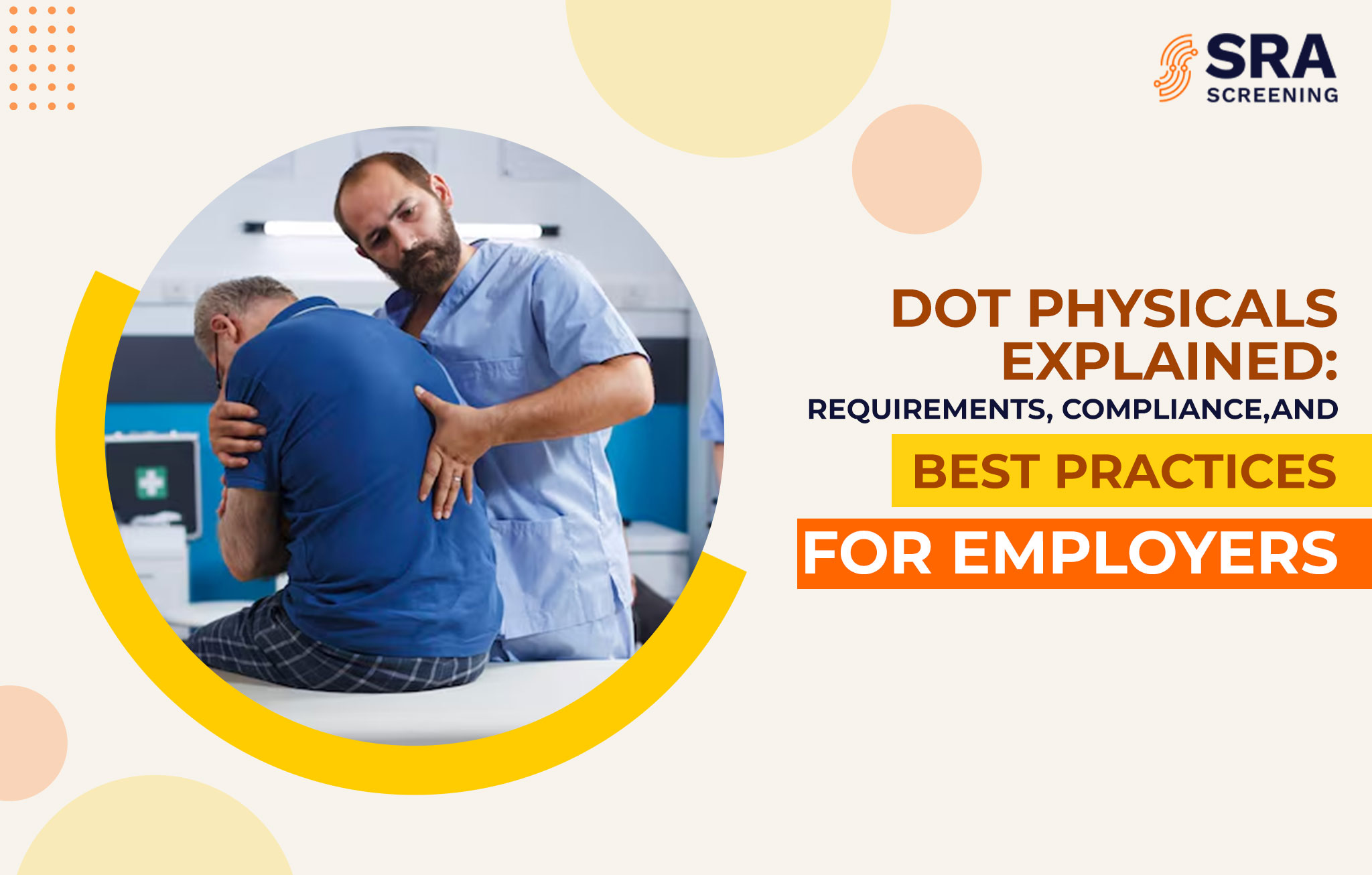
A DOT physical is a federally mandated medical examination required for individuals who operate commercial motor vehicles (CMVs). The purpose of the exam is to verify that a driver meets the physical and mental health standards established by the Federal Motor Carrier Safety Administration (FMCSA).
DOT physicals must be administered by a certified medical examiner and listed on the FMCSA National Registry. Drivers who successfully meet all medical requirements are issued a Medical Examiner’s Certificate (MEC), commonly referred to as a DOT medical card, which serves as official documentation of medical qualification.
In most cases, a DOT medical card is valid for up to 24 months. The certification period may be shortened based on the driver’s medical history, current health status, or the need for ongoing medical evaluation.
Employers should note that the certification period and expiration date are determined solely by the FMCSA-certified medical examiner. Neither the employer, the applicant, nor the consumer reporting agency (CRA) has the authority to establish or modify the length of certification.
A DOT physical evaluates whether a driver meets FMCSA medical standards to operate a commercial motor vehicle. During the examination, the medical examiner reviews several key health areas, including:
These assessments are intended to promote roadway safety and help employers mitigate compliance and liability risks associated with medically unqualified drivers.
Federal Motor Carrier Safety Administration (FMCSA) regulations under 49 CFR §391.41 establish the medical qualification standards that drivers must meet to operate commercial motor vehicles. Employers are responsible for ensuring that drivers in safety-sensitive positions maintain compliance with these medical requirements throughout their employment.
FMCSA regulations require drivers to meet specific physical and mental health criteria related to cardiovascular, respiratory, neurological, vision, hearing, and metabolic health. Drivers may be temporarily or permanently restricted from operating a commercial motor vehicle if they do not meet these standards at the time of examination. In certain cases, FMCSA exemptions or waivers may be available when supported by appropriate medical documentation. Employers should verify that any exemptions are valid, current, and properly documented within the driver qualification file.
FMCSA regulations also address medication and substance use as part of medical qualification requirements. Drivers are prohibited from using Schedule I controlled substances, including marijuana, regardless of state-level legalization. In addition, drivers who take prescribed medications must have appropriate medical documentation confirming that the medication does not impair their ability to operate a commercial motor vehicle.
While DOT drug testing and DOT physical examinations are separate regulatory requirements, both directly affect a driver’s qualification status. Employers should ensure that drivers remain compliant with both programs to avoid regulatory violations and operational disruptions.
When a DOT medical certificate expires, the driver is no longer medically qualified to operate a commercial motor vehicle. Allowing a driver to continue working without a valid certification may result in compliance violations and can expose employers to operational and financial risk. Expired certifications may also disrupt dispatch schedules and impact overall productivity. As a best practice, employers should initiate the renewal process 30 to 45 days prior to the expiration date to allow sufficient time for follow-up testing or additional documentation, if required.
Employers can reduce the risk of DOT certification lapses by actively tracking medical card expiration dates and implementing reminder systems or compliance tools to ensure timely renewals. Partnering with a reliable screening provider can help streamline scheduling, documentation, and recordkeeping for DOT physicals. Encouraging drivers to report health changes early may also help prevent unexpected disqualifications. Staying informed of FMCSA regulatory updates further supports compliance efforts. Proactive management of DOT medical certifications helps minimize downtime, reduce liability exposure, and avoid potential fines.
Managing DOT compliance across a workforce requires accuracy, security, and a thorough understanding of regulatory requirements. SRA Screening is an FCRA-compliant screening provider offering DOT Physical services nationwide to support employers with safety-sensitive positions.
Our services are designed to reduce administrative burden, minimize driver downtime, safeguard sensitive medical information, and efficiently coordinate DOT physicals and drug testing. By partnering with SRA Screening, employers gain access to scalable, compliant screening services that support ongoing regulatory compliance and operational efficiency.
Contact SRA Screening to learn how we support DOT-regulated employers with scalable, compliant screening solutions.
Who can perform a DOT physical?
DOT physicals may only be performed by medical examiners who are certified and listed on the FMCSA National Registry.
What happens if a driver’s DOT medical card expires while employed?
The driver may not legally operate a commercial motor vehicle until a valid medical certificate is obtained. Employers should proactively track expiration dates to prevent compliance gaps.
What makes a DOT Physical different than a pre-employment physical?
A DOT physical is federally regulated and evaluates whether a driver meets FMCSA medical standards to operate a commercial motor vehicle. A pre-employment physical, by contrast, is employer-specific and may assess general fitness for duty but does not replace a DOT physical for safety-sensitive driving roles.
DISCLAIMER: This blog post is for informational purposes only and is not legal advice. Please consult a qualified professional before making any decisions.
The FCRA is enforced federally, but states may also implement it and have their own consumer reporting laws. You may have additional rights under state law. For more information, contact your state or local consumer protection agency or your state attorney general.
SRA Screening Insights – February Edition Message from the Editors: Welcome to
When a workplace accident occurs, employers must quickly address a range of
Get updates, exclusive offers, and insights straight to your inbox.