
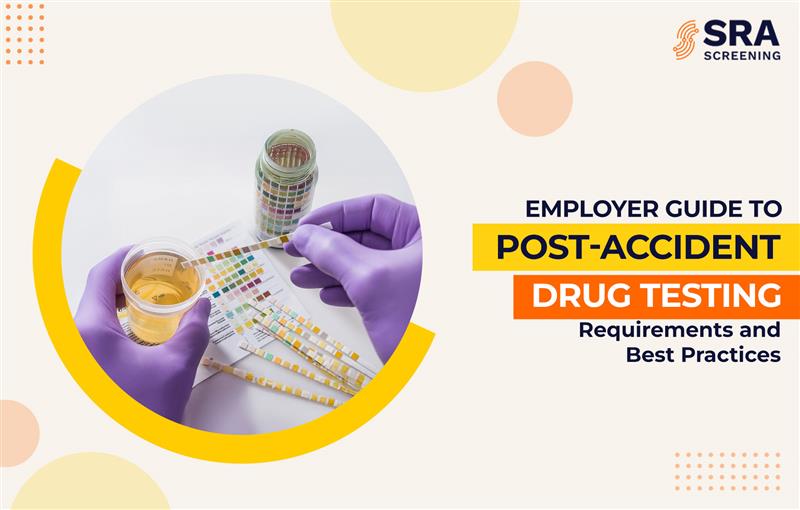
When a workplace accident occurs, employers must quickly address a range of critical responsibilities, including employee medical care, incident documentation, and regulatory reporting.
In many cases, employers must also determine whether a post-accident drug test is appropriate.
While post-accident drug testing can be an effective tool for supporting workplace safety and risk management efforts, it must be administered thoughtfully and in accordance with applicable legal and regulatory requirements.
Improper testing practices can create unnecessary compliance exposure, increase litigation risk, and negatively impact employee relations.
A post-accident drug test is administered after a workplace incident to help determine whether drugs or alcohol may have contributed to the event.
In some cases, post-accident drug testing is required by law, such as for employees in Department of Transportation (DOT) regulated positions when specific triggering events occur.
For non-regulated employees, post-accident testing is generally governed by employer policy rather than a legal mandate. In those situations, testing should never be arbitrary. Employers should only test when there is a defined, legitimate business reason tied to workplace safety or established policy standards.
Post-accident drug screening helps employers assess whether drugs or alcohol may have contributed to a workplace incident.
When used appropriately, it supports workplace safety initiatives, helps identify training or policy gaps, reduces liability exposure, and demonstrates an employer’s commitment to maintaining a safe work environment. Test results may also be relevant for insurance claims, workers’ compensation determinations, and regulatory compliance, depending on the circumstances of the incident.
Rather than making post-accident decisions on the spot, employers benefit from having clear, written guidelines that explain when testing is required and how it will be conducted. A consistent approach not only helps reduce compliance risk but also reinforces fairness and transparency, which are essential to maintaining employee trust.
A well-structured post-accident testing program should clearly address the following key elements:
Clearly define the types of incidents that trigger post-accident testing. Avoid vague or subjective language so employees and supervisors share a common understanding of when testing is required under the company’s post-accident drug testing policy.
Designate responsibility for initiating post-accident testing, such as Human Resources, a safety manager, or a trained supervisor. Clear ownership helps prevent delays and ensures the process is followed correctly.
Outline expectations for when testing should occur following an incident. Testing should take place as soon as reasonably possible, while always prioritizing medical care and employee safety.
Specify whether post-accident testing includes drugs, alcohol, or both. Employers should also clarify which testing panels are used and whether substances such as marijuana are included.
Define what constitutes a refusal to test and explain how refusals will be handled under company policy. This sets clear expectations and supports consistent enforcement.
Clear, written standards help ensure consistent application of post-accident testing requirements and provide a defensible framework if testing decisions or results are later questioned.
When a post-accident drug test is conducted by a third-party provider that qualifies as a Consumer Reporting Agency (CRA) and the results are used for employment decisions, the Fair Credit Reporting Act (FCRA) may apply. In these situations, employers must provide a clear, standalone disclosure and obtain written authorization before ordering the report. If the results may lead to termination, employers are required to follow the FCRA’s two-step adverse action process: issuing a pre-adverse action notice that includes a copy of the report, a Summary of Rights Under the FCRA, and a reasonable opportunity to dispute the results, followed by a final adverse action notice after the waiting period and consideration of any dispute. Failure to follow these requirements can result in significant legal exposure, even when the underlying policy violation seems straightforward.
While the FCRA is central to background screening compliance, employers must also account for other regulatory considerations that affect post-accident drug testing.
Employers with Department of Transportation (DOT)-covered positions are subject to specific post-accident testing requirements, including defined triggering events, strict timing windows, and detailed documentation standards. For non-DOT and DOT post-accident drug testing requirements, programs should always be administered separately, as blending the two can lead to significant compliance errors.
State laws governing post-accident drug testing vary significantly and may impose additional requirements or limitations beyond federal standards. Because these laws differ by jurisdiction and are subject to change, employers—particularly those operating in multiple states—should work closely with experienced legal counsel to ensure their post-accident testing policies and procedures remain compliant with applicable state and local requirements.
Post-accident drug testing programs can expose employers to compliance risk when policies are unclear or procedures are not followed consistently. Common risks include initiating testing without a clearly defined policy trigger, applying testing standards inconsistently across employees or incidents, and taking disciplinary action before completing required Fair Credit Reporting Act adverse action steps when applicable. Employers may also encounter compliance issues by improperly mixing DOT and non-DOT testing requirements, failing to maintain adequate documentation, or disclosing sensitive test results beyond those with a legitimate business need to know. Addressing these risks requires clear policies, proper training, and careful coordination between supervisors, human resources, and testing providers.
Post-accident drug testing is a critical component of an effective workplace safety and risk management framework, but it requires careful planning and disciplined execution. Employers that engage background screening providers should ensure their post-accident testing programs are supported by clearly defined policies and aligned with applicable federal, state, and industry-specific requirements, including Department of Transportation regulations where applicable.
When administered consistently and in accordance with established standards, post-accident testing can reduce legal and regulatory exposure while strengthening accountability and trust within the organization. SRA Screening supports employers with compliant, reliable post-accident drug testing programs designed to meet evolving regulatory requirements.
When is post-accident drug testing appropriate?
Post-accident drug testing is appropriate when a workplace incident meets the criteria outlined in the employer’s written policy or, for regulated positions, applicable legal requirements. Testing should be based on objective factors, such as the severity of the incident, involvement of safety-sensitive duties, or a reasonable belief that drug or alcohol use may have contributed to the event. Testing should never be conducted arbitrarily.
For more details on post-incident drug and alcohol testing services, contact SRA Screening.
Is post-accident drug testing required by law?
Post-accident drug testing is required in certain regulated environments, such as for Department of Transportation-covered positions when specific triggering events occur. For most non-regulated employees, testing is not legally mandated and is instead governed by employer policy, subject to applicable federal and state laws.
What are common compliance risks employers should avoid?
Common risks include inconsistent application of testing policies, failure to follow FCRA adverse action procedures when applicable, improperly mixing DOT and non-DOT testing requirements, and inadequate documentation of testing decisions. Clear policies, supervisor training, and coordination with experienced screening providers can help reduce these risks.
How quickly should post-accident drug testing occur after an incident?
Testing should be conducted as soon as reasonably possible following an incident, while always prioritizing employee medical care and safety. Employers should outline timing expectations in their written policies to ensure consistency and compliance.
DISCLAIMER: This blog post is for informational purposes only and is not legal advice. Please consult a qualified professional before making any decisions.
The FCRA is enforced federally, but states may also implement it and have their own consumer reporting laws. You may have additional rights under state law. For more information, contact your state or local consumer protection agency or your state attorney general.
SRA Screening Insights – February Edition Message from the Editors: Welcome to
When a workplace accident occurs, employers must quickly address a range of
Get updates, exclusive offers, and insights straight to your inbox.