
Welcome to the September edition of SRA Screening Insights. This month’s newsletter features updates on employment background screening, compliance, credential verification, and industry news to help you stay informed and hire with confidence.
Klasey Wojcik
kwojcik@srascreening.com
Direct: (754) 201-2693
Zulay Moreno
zmoreno@srascreening.com
Direct: (561) 569-8027
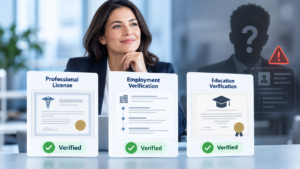
A Missouri woman is facing multiple felony charges after authorities allege she used forged academic credentials to obtain nursing positions at several healthcare facilities. Court documents state that falsified transcripts, diplomas, and graduation records were submitted to support claims of completing an approved nursing program. Concerns were raised after supervisors observed significant gaps in basic nursing skills, prompting investigations that uncovered discrepancies in the submitted credentials.
The risk isn’t just a falsified resume, it’s placing someone in a role they may not be qualified to perform. Thorough education and professional license verification helps employers confirm that candidates have the credentials required before they step into safety-sensitive positions.
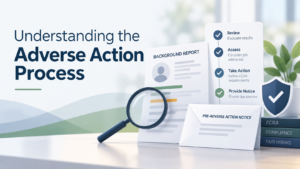
When a background check may impact an employment decision, employers must follow the proper adverse action process before taking final action. Under the Fair Credit Reporting Act (FCRA), this process gives applicants and employees notice of the information being considered and an opportunity to review or dispute potentially inaccurate information. It generally includes a pre-adverse action notice, a copy of the background report and Summary of Rights, a reasonable waiting period, and a final adverse action notice if the employer chooses to proceed. Employers should also be mindful of state and local requirements, which may include additional notices, waiting periods, or individualized assessment obligations. A clear, well-documented process helps support compliance while ensuring individuals have an opportunity to address the information in their report.
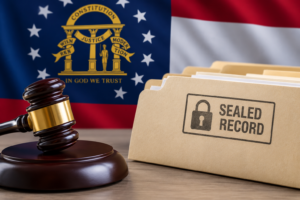
Effective July 1, 2026, Georgia expanded its First Offender Act to automatically seal and restrict eligible First Offender records from public access. As a result, certain court records and related information may no longer be available through standard employment background checks once they qualify for protection under the law. This may reduce situations where an applicant reports no conviction, but a First Offender matter still appears. Individuals who received First Offender treatment before July 1, 2026 may also petition the court for these protections if their status was not revoked. Employers should continue making individualized hiring decisions based on job-related factors, the nature of the conduct, and the amount of time that has passed.
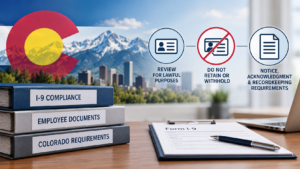
Colorado has introduced new requirements affecting how employers handle identification documents during hiring and employment verification. While employers may continue reviewing documents for Form I-9 and other lawful verification purposes, the law places limits on retaining, withholding, or requiring employees to surrender original identification documents. Employers also have new notice, acknowledgment, and recordkeeping obligations related to these protections. HR and onboarding teams should review their current I-9 and document-handling procedures to ensure they align with Colorado’s updated requirements.

A Milwaukee woman was ordered to pay $144,000 after a civil lawsuit alleged she provided dental services without a professional license, resulting in significant harm to a customer. State records showed she was not licensed to practice dentistry, despite operating a business that offered cosmetic dental services. The case reflects a broader nationwide concern, with similar reports of unlicensed cosmetic dental providers and enforcement actions in other states. For employers, particularly in healthcare and other regulated industries, the case reinforces the importance of verifying professional licenses and credentials before individuals are placed in roles that require specialized qualifications.
Stay informed, stay compliant, and streamline your hiring process with SRA Screening.